Mulch looks simple until you try to buy it. Walk into a garden center in May, and you will find shredded hardwood, dyed chips, rubber nuggets, river stone, and bags of pine needles, all promising to be the right answer for your beds.
Prices swing widely, the color on the bag rarely matches what ends up in the yard, and nobody mentions how any of it handles a Buffalo winter. That confusion is how people end up redoing the job two summers later.
The crew at Prime Landscapers has spread a lot of mulch across Buffalo yards and has seen which choices hold up and which ones cause trouble. This guide covers the types of mulch, what each one does, and which one fits your garden, your trees, and your budget. The answer is usually shorter than you would expect.
Why Mulch Matters in Buffalo Yards
Mulch does more than make a bed look finished. A layer on top of the soil slows evaporation and keeps weeds from sprouting. It also cushions roots against temperature swings. Buffalo gives plants plenty to deal with: lake-effect snow, long freeze and thaw stretches in March, dry spells in July, and heavy clay soil across much of Erie County.
Clay holds water, then cracks when it dries out. A proper mulch layer evens that out and keeps rain from splashing soil up onto leaves, which cuts down on some fungal trouble. When people ask whether mulch is worth the work, we point to the plants. Beds that are mulched well need less watering and less weeding by midsummer.
The Main Types of Mulch at a Glance
Most types of mulch fall into two camps. Organic mulches come from plants, and that group includes shredded hardwood, bark nuggets, cedar, pine needles, compost, and leaf mulch. Inorganic mulches do not break down, including rubber made from recycled tires and decorative stone.
Each one has a job. Wood and bark suit planting beds and tree rings. Stone works along drainage paths and in spots where nothing needs to grow. Rubber belongs mostly around play areas. Choosing between them is less about taste and more about what that spot needs a year or five from now.
Wood and Bark Mulch
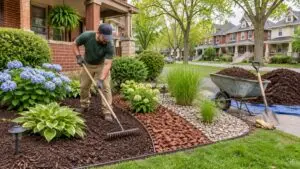
Wood and bark mulch is what we spread most. Shredded hardwood knits together, stays put on slopes, and breaks down within a year or two, which is the point. As it decays, it feeds the soil and loosens heavy clay over time.
Bark nuggets are chunkier and last a little longer, though they can float and shift when a downpour hits a bed. Cedar resists decay well and has a pleasant scent. Pine needles are light and slightly acidic, and they look nice around hydrangeas and azaleas, although their effect on soil pH is small.
One warning from experience: ask where the wood came from. Mulch made from recycled pallets or construction scrap can carry material you do not want in a garden.
Rubber Mulch
Rubber mulch is shredded recycled tires. It does not rot, bugs mostly ignore it, and it holds its color for years. Those are real advantages, and on a playground it makes sense because it cushions falls. In a garden bed, it is a harder sell. Rubber adds nothing to the soil, it soaks up heat in summer, and it can wash around in heavy runoff.
It is also flammable, and a rubber mulch fire is hard to put out, so many fire safety guidelines advise keeping it away from houses and decks. Getting it out later is a miserable chore because it never breaks down and bits end up in the lawn. We rarely recommend it for plantings.
Stone and Gravel Mulch
Stone mulch is permanent, and that is both its strength and its problem. River rock, pea gravel, and crushed stone do not decompose, do not fade much, and stay put in heavy rain. They work well in drainage swales, along a driveway edge, and around plants that like dry feet. The downsides show up with time.
Stone heats up in full sun, which can stress shallow-rooted plants. Leaves and seeds settle between the rocks and make cleanup tedious. Limestone chips can also nudge soil pH upward, which matters for acid-loving plants.
When you decide to switch materials, you will be shoveling rock. Keep it away from places where you push snow, because a plow edge or shovel will throw it into the lawn.
Wood vs Rubber Mulch: A Direct Comparison
The wood vs rubber mulch question comes up constantly, so here is the short version.
Wood wins in nearly every planting bed. It improves the soil as it decays, stays cooler, usually costs less, and is easy to refresh. Rubber wins where a surface has to cushion falls, such as under a swing set, or where you want something that will not need replacing for many years.
That long life sounds good until you think about what it means. The same material sits in your yard indefinitely, feeds nothing, and cannot be worked into the soil. Wood needs a top-up every year or two, and that yearly refresh actually helps the bed.
Organic vs Inorganic Mulch
The organic vs inorganic mulch decision comes down to whether you want the bed to improve over time or simply stay covered. Organic mulch is active. It breaks down, feeds earthworms and soil life, and adds organic matter that Buffalo clay soils benefit from. The trade-off is upkeep, since it thins out and needs replacing.
Inorganic mulch is passive. It blocks light and holds its shape, but it does nothing for the soil, and weeds can still root in the dust that collects on top. For most homeowners with perennials and shrubs, organic is the better fit. Inorganic belongs in narrow strips and paths where you would rather not touch it again.
Mulch Colors and Fading
Mulch colors are mostly a matter of dye. Most dyed mulches use iron oxide or carbon-based pigments, and they are considered safe for garden use when they come from a reputable supplier. Natural, undyed hardwood and cedar start out tan or brown and weather toward gray.
Among the color options, dyed mulch looks sharp for the first season. Then sun and rain pull the color back, and red tends to fade faster than dark brown. Fading does not mean the mulch stopped working. A quick rake turns up the less faded pieces and brings some color back. If you want a color that holds, dark brown hides the fading better than red does.
Best Mulch for Garden Beds vs Trees
Where the mulch goes changes what you should buy. For flower and shrub beds, shredded hardwood or fine bark is the best mulch for garden beds because it settles around stems and keeps weeds down. Two to three inches is plenty. For trees, coarser chips or bark work better, and the best mulch for trees is a wide ring, not a tall pile.
Spread it two to four inches deep out toward the drip line if you can, and keep it a few inches back from the trunk. Mulch piled against bark holds moisture and invites rot and rodents.
We call those piles mulch volcanoes, and we pull a lot of them apart every spring. Rubber and stone around trees heat the root zone and give nothing back, so we skip both there. In vegetable gardens, straw or shredded leaves beat dyed wood.
Longevity and Cost
People ask how long mulch lasts and what it costs, and both answers depend on the material. Shredded hardwood usually needs refreshing every one to two years. Bark nuggets and cedar often last two to three years.
Stone and rubber do not decompose, though they still need cleanup and the occasional top-up. On price, wood is usually the cheapest per cubic yard when bought in bulk, bagged mulch costs more per yard, and stone and rubber typically cost noticeably more. Prices move with the season and the supplier, so get a current quote.
One cubic yard covers roughly 100 square feet at three inches deep, which helps you estimate. The lowest price at checkout is not always the lowest over ten years, but for planting beds, wood still tends to come out ahead.
Timing and Garden Mulch Installation in Buffalo
Good garden mulch installation starts before any mulch lands. Pull weeds, cut a clean edge, and rake out old mulch that has matted down. We skip thick landscape fabric under wood mulch, since it tangles with roots and the mulch breaks down on top of it anyway.
In Buffalo, late April through May is the usual window, once the soil has thawed and dried out. Fall works too, after the leaves drop, and a light layer after the first hard freeze helps limit frost heaving around perennials.
Keep mulch a few inches off siding and foundation walls, since it holds moisture. Fresh mulch should smell earthy. A sour, vinegar smell means it sat wet in a pile too long and can burn tender plants, so let it air out first.
Mistakes We See Most Often
Most mulch problems come from too much of it. Layers deeper than three or four inches smother roots, and in clay they keep beds soggy for days after rain. Laying fresh mulch over old without raking builds a crust that sheds water.
Beds near driveways and sidewalks also take road salt spray all winter, so match plants to those spots. Cheap dyed mulch is a gamble because quality varies, and a few minutes looking and smelling at the supplier saves regret.
Choosing a Mulch Installation Service in Buffalo
If you decide to hire a mulch installation service, treat it like any other contractor decision. Ask for proof of insurance. Ask which mulch they plan to use, how deep, and where it comes from. A written quote should list cubic yards, edging, and cleanup, not just a lump sum.
Look at the company’s Google Business Profile: a real local address, a phone number that works, and recent reviews from customers near you tell you more than a polished ad. Photos of finished beds help too.
Crews around Buffalo fill up fast from April through June, so booking early gets you better dates. If you want a second opinion on your beds, the team at Prime Landscapers explains its approach to mulch installation on the Buffalo NY page.
Choosing the Right Mulch for Your Yard
Picking from the types of mulch does not have to take long. For most Buffalo gardens, shredded hardwood or bark at two to three inches does the job, with a wider ring of chips under trees.
Rubber and stone have their places, just fewer of them than the bags suggest. If you would like someone to look at your yard and tell you straight what fits, Prime Landscapers is happy to walk through it.
Frequently Asked Questions
What are the main types of mulch?
The main types of mulch are wood and bark, rubber, stone, and pine needles or compost. Wood, bark, needles, and compost are organic and break down over time. Rubber and stone are inorganic and stay put. Each works best in specific spots around a Buffalo property.
Is wood or rubber mulch better for Buffalo gardens?
Wood is better for most planting beds because it breaks down and feeds clay soil. Rubber suits play areas where cushioning matters, but it adds nothing to the soil and can burn. In a typical Buffalo garden, wood is the better choice nearly every time.
How deep should mulch be?
Two to three inches is right for wood or bark. Anything deeper can hold too much water in Buffalo clay and suffocate roots. Keep mulch pulled back a few inches from trunks and stems so the bark can breathe and stay dry.
How long does mulch last?
Shredded hardwood usually breaks down in one to two years. Bark nuggets and cedar can last two to three years. Stone and rubber do not decompose, though they still need raking, topping off, and debris cleanup every so often to keep looking right.
Do mulch colors fade?
Yes. Dyed mulch loses color under sun and rain, often noticeably after one season, and red usually fades faster than dark brown. A quick rake and a thin fresh layer bring the color back. Natural cedar and hardwood weather toward gray.