Buffalo, NY, homeowners know that winter weather can bring heavy snowfall, freezing temperatures, and repeated freeze and thaw cycles. While snow-covered roofs are a familiar part of the season, excessive snow accumulation and ice dams can create serious concerns for roofing systems, gutters, attics, and interior spaces.
Understanding when to arrange roof snow removal Buffalo NY homeowners may need and how to reduce ice dam formation can help protect your property throughout winter. Taking preventive steps before severe weather arrives is often easier than dealing with water leaks, damaged ceilings, or other costly problems after a storm.
Prime Landscapers serves property owners in Buffalo, NY, with seasonal property maintenance services. This guide explains the warning signs of roof snow problems, how ice dams develop, and which preventive measures can help keep your home safer during Western New York winters.
Why Roof Snow Removal Matters in Buffalo, NY
Buffalo winters can bring substantial snowfall, strong winds, and prolonged periods of freezing weather. Snow may accumulate over several storms, particularly when temperatures remain low and earlier snowfall does not melt completely.
Although many roofs are designed to support expected environmental loads, the amount of snow a roof can safely carry depends on its structure, condition, design, and the characteristics of the accumulated snow. Wet snow is generally heavier than fresh, dry snow, and drifting can create uneven accumulation across a roof.
Excessive or uneven snow buildup may increase structural stress and contribute to problems around roof edges, valleys, gutters, and other vulnerable areas.
Professional roof snow removal can be appropriate when accumulation becomes a concern. However, snow should not automatically be removed after every snowfall. The decision should account for the roof’s condition, the amount and type of snow, and any signs of structural distress.
Homeowners should also remember that roof work can be dangerous. Climbing onto a snowy or icy roof without appropriate training and equipment can lead to serious injuries.
What Is Roof Snow Load?
Roof snow load refers to the weight of snow and related accumulation that a roof must support. It is an important consideration during long or severe winter weather.
Several factors can influence the load placed on a roof:
- The depth and density of accumulated snow
- Whether the snow is wet, compacted, or frozen
- Drifting caused by wind
- Snow collecting in valleys or behind roof features
- Existing ice accumulation
- Roof design, span, age, and structural condition
- Previous damage or maintenance issues
Snow depth alone does not tell you exactly how much weight your roof is carrying. Two roofs with similar snow depths may experience different loads because snow density and distribution can vary.
Watch for warning signs such as new ceiling cracks, unusual popping or creaking sounds, sagging rooflines, doors that suddenly stick, or visible deformation of structural components. These symptoms do not confirm a particular cause, but they should be taken seriously.
If you suspect structural distress, keep people away from the affected area and contact qualified building or structural professionals promptly. Do not climb onto the roof to investigate.
What Is an Ice Dam and How Does It Form?
An ice dam is a ridge of ice that develops near a roof edge and prevents melting snow from draining away normally.
Ice dams often form when heat escapes from a home into the attic and warms portions of the roof. Snow on the warmer sections melts, and the resulting water flows toward colder roof edges. When the water reaches a freezing area, it can freeze and gradually build an ice barrier.
Additional meltwater may collect behind that barrier. Under some conditions, water can move beneath roofing materials and enter the home.
Ice dams are more likely when several factors combine, including uneven roof temperatures, inadequate attic air sealing, insufficient insulation, ventilation problems, and extended periods of freezing weather.
Not every icicle indicates that an ice dam has formed. However, large ice formations accompanied by water stains, recurring leaks, or ice buildup along roof edges deserve attention.
Common Signs of Ice Dams on Buffalo Homes
Recognizing early warning signs can help homeowners respond before water damage spreads.
Thick Ice Along Roof Edges
A substantial ridge of ice along the eaves may indicate that water is freezing repeatedly in the same area. Ice at the edge does not always mean an ice dam is present, but persistent buildup should be monitored.
Large Icicles
Icicles can form when melting snow reaches a cold roof edge. Numerous or unusually large icicles may indicate heat loss or repeated melting and refreezing.
Icicles can also fall unexpectedly, creating a hazard for people, pets, and vehicles below.
Water Stains on Ceilings or Walls
Brown or yellow stains, peeling paint, damp drywall, and moisture near exterior walls may indicate a roof leak. Ice dams are one possible cause, although damaged shingles, flashing, and other roof problems can also allow water inside.
Wet or Compressed Attic Insulation
Moisture in attic insulation can reduce its effectiveness and may indicate air leakage, condensation, or roof-related water intrusion. A qualified professional can help determine the source.
Repeated Winter Leaks
If a roof leaks during snowy weather but appears dry during other seasons, melting snow and ice accumulation may be contributing to the problem. A roofing professional can inspect the affected areas and recommend appropriate repairs.
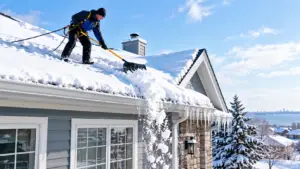
Roof Raking: A Practical Snow Removal Option
Roof raking involves using a specialized long-handled tool to remove accessible snow from roof edges while the person remains on the ground. When appropriate for the roof and site conditions, it can reduce accumulation near the eaves and may help limit conditions that contribute to ice dams.
However, roof raking is not suitable for every roof, and improper use can damage shingles, gutters, or other roofing components.
Keep these precautions in mind:
- Use equipment designed specifically for roof snow removal.
- Follow the tool manufacturer’s instructions.
- Work from stable ground and avoid standing beneath falling snow.
- Keep clear of overhead power lines.
- Avoid pulling forcefully against shingles, gutters, or roof edges.
- Do not attempt to remove thick ice with a rake, shovel, or other impact tool.
- Stop if the work becomes difficult or unsafe.
Snow falling from a roof can slide or collapse suddenly. Make sure people and pets stay away from the work area.
For steep roofs, heavy accumulation, difficult access, or suspected structural problems, consult an appropriately qualified professional instead of attempting the work yourself.
When Should You Arrange Professional Roof Snow Removal?
The right time to seek help depends on the roof’s design, the conditions on the property, and the signs of potential problems.
Consider professional advice when:
- Snow has accumulated over several storms without significant melting.
- Heavy, wet snow is creating concern about roof loading.
- Drifting has created deep snow deposits in roof valleys.
- Ice buildup is contributing to recurring leaks.
- The roof has known damage or structural concerns.
- Snow cannot be removed safely from the ground.
- You notice signs that may indicate structural movement.
There is no single snow depth that automatically means every roof needs clearing. If you are uncertain about the amount of snow your roof can safely support, consult a qualified roofing or structural professional.
If the roof appears to be sagging, you hear unusual structural noises, or you observe other signs of possible failure, move away from the affected area and seek urgent professional guidance. Do not wait for a routine maintenance visit.
Attic Insulation and Ice Dams: Addressing the Root Cause
Removing snow can help manage immediate accumulation, but it does not necessarily prevent ice dams from returning. Long-term prevention often involves reducing unwanted heat transfer into the attic.
Improve Air Sealing
Warm indoor air can escape through gaps around ceiling fixtures, attic hatches, plumbing penetrations, wiring openings, and other gaps in the building envelope.
Sealing appropriate openings can reduce heat loss and help maintain more consistent roof temperatures. Work around electrical components, combustion appliances, and ventilation systems should follow applicable safety requirements.
Check Attic Insulation
Adequate, properly installed insulation helps limit heat transfer from living spaces into the attic. Insulation should be suitable for the home’s design and climate, with installation that does not block required ventilation paths.
Adding insulation without addressing air leakage may not fully solve the problem. A professional energy assessment can help identify the most effective improvements.
Maintain Proper Ventilation
Attic ventilation helps manage heat and moisture, but it must be designed for the building rather than treated as a one-size-fits-all solution. Blocked soffit vents or poorly configured ventilation can interfere with attic performance.
A qualified roofing or insulation professional can inspect ventilation and recommend changes appropriate for the home.
Manage Indoor Moisture
Cooking, bathing, laundry, and other everyday activities produce moisture. Exhaust fans that vent outdoors and appropriate indoor humidity management can help reduce moisture buildup in the home and attic.
Addressing insulation, air leakage, and ventilation together is often more effective than relying on a single change.
Icicle Safety Around Your Home
Icicles may look harmless, but large formations can injure people or damage property when they fall. They may also signal recurring meltwater along roof edges.
To improve icicle safety, keep walkways, entrances, driveways, and areas below heavy ice buildup clear when possible. Do not stand directly beneath icicles or attempt to knock them down while other people are nearby.
Avoid climbing ladders on icy ground or reaching toward the roof with tools. These activities can cause falls or expose you to falling ice and snow.
If icicles are attached to overhead power lines or are near electrical equipment, do not approach them. Contact the appropriate utility or qualified service provider.
Where ice buildup repeatedly occurs above a frequently used entrance, consider having the roof and attic evaluated to identify the underlying cause and determine what corrective work may be appropriate.
Common Roof Snow Removal Mistakes to Avoid
Homeowners sometimes make winter roof problems worse by using the wrong tools or attempting work beyond their abilities.
Using metal shovels: Metal tools can damage shingles and other roof materials. Use only suitable equipment according to manufacturer guidance.
Chipping away ice: Striking ice can damage roofing components and create falling debris. Ice dam removal may require specialized professional methods.
Climbing onto an icy roof: Snow and ice create serious fall risks. Roof access should be handled by appropriately equipped professionals.
Ignoring recurring leaks: Water entering the home can damage insulation, drywall, framing, and finishes. Investigate the source rather than treating stains as a cosmetic issue.
Focusing only on snow removal: Clearing snow may address an immediate concern, but recurring ice dams often require improvements to insulation, air sealing, ventilation, or roof drainage.
A careful approach prioritizes safety, identifies the underlying problem, and avoids unnecessary damage to the roof.
How Prime Landscapers Can Help Buffalo Property Owners
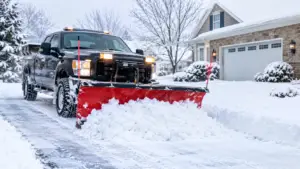
Winter maintenance involves more than clearing snow from driveways and walkways. Homeowners may also need to monitor roof edges, access routes, falling ice hazards, and areas affected by repeated snow accumulation.
Prime Landscapers serves property owners in Buffalo, NY, with landscaping and seasonal property maintenance solutions. For winter service planning, homeowners should confirm the exact services offered and whether specialized roof work is available before scheduling.
Roof snow removal is different from ordinary ground-level snow clearing. It may require specialized equipment, training, and safety procedures, particularly when the roof is steep, the snow is heavy, or ice has formed.
If you have concerns about roof loading, ice dams, or active leaks, contact a qualified roofing or structural professional for an assessment. A coordinated maintenance plan can help address both immediate winter concerns and the property conditions that contribute to recurring problems.

Retaining Walls in Buffalo, NY: Benefits, Materials and Uses
Learn how retaining walls can improve sloped yards, control soil erosion, manage changes in elevation, and create more usable outdoor spaces. Explore popular retaining wall materials, including natural stone, concrete blocks, and other durable options. Discover important factors such as drainage, soil conditions, wall height, site preparation, and long-term maintenance when planning a retaining wall for your Buffalo property. Prime Landscapers can help homeowners evaluate landscaping needs and plan outdoor improvements suited to their property.
Continue Reading →
Residential Snow Removal in Buffalo, NY: Winter Planning Guide
Prepare your property for Buffalo’s winter weather with a practical residential snow removal plan. Learn how driveway and walkway clearing, snowfall accumulation, ice management, de-icing treatments, and service scheduling can help maintain safer access around your home. Understand how driveway size, parking availability, property layout, and changing winter conditions affect snow removal needs. Planning ahead with a reliable snow removal service can help reduce winter disruptions and keep essential outdoor areas accessible throughout the season.
Continue Reading →Prepare Your Buffalo Home Before the Next Snowstorm
Preventing winter roof damage starts with understanding how snow accumulation, attic heat loss, and freezing temperatures interact. Monitoring warning signs, maintaining appropriate insulation and ventilation, and arranging professional help when necessary can reduce avoidable risks.
If you are researching roof snow removal Buffalo NY homeowners may need during severe winter weather, remember that safe snow management depends on the roof’s condition and the circumstances at your property. Avoid risky do-it-yourself roof work, and take signs of structural distress or water intrusion seriously.
Prime Landscapers can help Buffalo property owners plan seasonal exterior maintenance. For roof-specific concerns, consult qualified roofing or structural professionals to determine the safest and most suitable next steps for your home.
Frequently Asked Questions
How much snow is too much for a roof in Buffalo, NY?
There is no universal snow depth that is unsafe for every roof. Roof design, snow density, drifting, structural condition, and ice accumulation all affect the load. Seek professional advice if you are concerned about excessive accumulation or notice signs of structural distress.
Does roof snow removal help prevent ice dams?
Removing accessible snow may reduce the amount available to melt and refreeze near roof edges. However, it does not fix heat loss or ventilation issues that can contribute to ice dams. Long-term prevention may require air sealing, insulation improvements, and a professional roof assessment.
Can I use a roof rake to remove snow myself?
A roof rake may be suitable for removing accessible snow from the ground when used correctly. Avoid standing beneath falling snow, contacting power lines, or damaging shingles and gutters. Do not climb onto an icy roof or attempt to break apart ice dams.
What causes ice dams on roofs?
Ice dams often form when heat escapes into the attic, warms sections of the roof, and melts snow. Water then travels toward colder eaves and freezes, creating a barrier that can trap additional water. Air sealing, insulation, and ventilation improvements may help reduce the risk.
Are icicles a sign of roof damage?
Not always. Icicles can form during ordinary melting and freezing conditions. However, persistent large icicles, thick ice along roof edges, interior water stains, or recurring winter leaks may indicate a problem that warrants professional evaluation.
Does attic insulation prevent ice dams?
Proper attic insulation can help limit heat transfer from living spaces to the roof. It works best as part of an overall approach that also considers air sealing, ventilation, and indoor moisture. A qualified professional can assess what improvements your home needs.
When should I call a professional for roof snow removal?
Seek professional help when snow accumulation is heavy, access is difficult, the roof is steep, ice has formed, or you cannot safely remove snow from the ground. If you notice sagging or other signs of possible structural distress, move away from the affected area and seek urgent professional guidance.
Who should I contact if an ice dam causes a roof leak?
Contact a qualified roofing professional to inspect the roof and identify the source of water intrusion. A building or insulation professional may also be needed to assess attic heat loss, air leakage, and ventilation. Address interior moisture promptly to limit further damage.